What Buying Or Selling In Jacksonville's Historic District Actually Requires
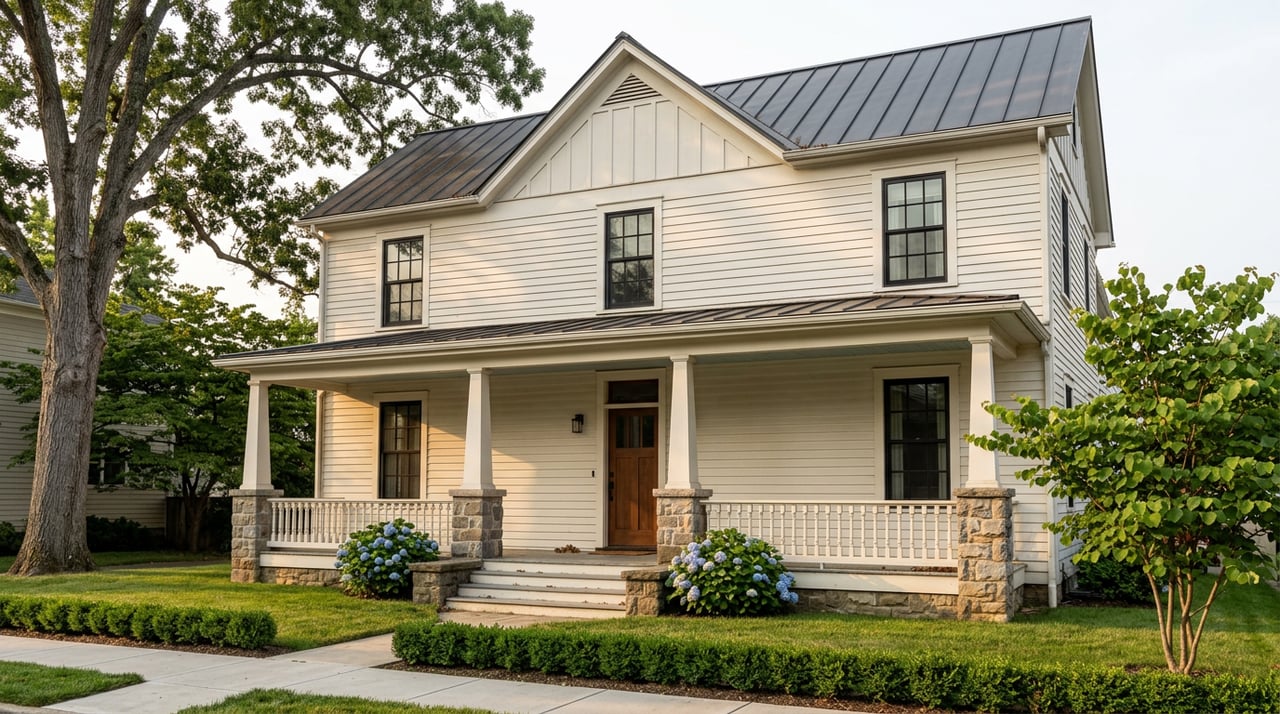
Most people assume that living inside a National Historic Landmark means every home project runs through a preservation board. That assumption is only half right, and the half that's wrong is the half that matters most if you're closing on a house here.
Even Britt Music & Arts Festival, the nonprofit that draws roughly 100,000 visitors a year to its hillside pavilion, is finding this out as it plans a new headquarters inside the historic U.S. Hotel building downtown. A beloved arts organization with a 2026 season built around a new music director and a lineup that includes Bonnie Raitt and Pink Martini still has to clear the same design review process as a homeowner replacing a porch rail. The rules in Jacksonville don't bend for who's asking. They do, however, bend based on what's being asked, and that distinction is where buyers and sellers either save themselves months of friction or walk straight into it.
Jacksonville's Unified Development Code splits residential property into two categories: 18.10, Historical Residential, for homes on the historic listed survey, and 18.11, Contemporary Residential, for everything else. That split alone tells you something useful: not every house in town is bound by the same design standards, even if it sits a block from the courthouse.
For homes that do fall under historic review, the city's own Certificate of Appropriateness application breaks projects into three review levels, each requiring a different depth of narrative and evidence.
| Review Level | Criteria Required | Typical Scope |
|---|---|---|
| Level 1 | Criteria 1 through 13 | New construction, major additions, street-visible changes |
| Level 2 | Criteria 1, 7, 8, 10, 13 | Moderate exterior alterations |
| Level 3 | Criterion 1 only | Minor, low-visibility work |
A Level 3 project can often be signed off by Planning staff without ever reaching a public hearing. A Level 1 project means a full narrative addressing thirteen separate standards, reviewed by the Historic and Architectural Review Commission itself. If you're comparing two listings, one requiring a Level 1 rebuild of a collapsed porch and one requiring a Level 3 repaint, you are not comparing two versions of the same paperwork. You're comparing two different timelines, two different budgets, and in practice, two different kinds of buyers.
Here's the part that catches people off guard during an actual transaction. The Historic and Architectural Review Commission is required to meet only a minimum of four times a year, once each quarter, though the chair or three voting members can call a special session when needed. That cadence is fine if your project is administrative. It's a real constraint if your project needs a full hearing and you're trying to close escrow on a normal timeline.
A useful, real example: a public hearing held June 25, 2025 for File No. 2025-048, a Certificate of Appropriateness for a new single-family dwelling, was evaluated against specific sections of the Jacksonville Unified Development Code, including 17.16, 18.05.040, 18.16.060, and 18.30.010. That's not a rubber stamp process. It's a hearing with a defined evidentiary record, public comment period, all scheduled around the Commission's quarterly rhythm rather than a buyer's thirty-day close.
If your offer or your listing plan depends on exterior work that triggers full Commission review, the practical question isn't whether you can get approval. It's whether the next scheduled meeting lands before or after your target closing date. Ask before you write the contingency, not after.
Jacksonville's Historic Element divides the city into eight Historic Character Units: the Historic Core, North Oregon Street, South Oregon Street, Third Street Corridor, North 5th Street, New School District, Old School District, and Stagecoach Hills. Each carries its own internal design expectations, tied to what the Historical Character Unit Map documents as the consistent physical features of that specific area.
What surprises people is what's left off that list. The Westmont and Paradise Ranch Road area sits close to downtown and reads as part of Jacksonville to anyone driving through, but the city's own planning documents note it was not found to be integral to the overall historic character of the city as a Historic Character Unit. That means a buyer weighing two houses a few blocks apart could be looking at meaningfully different design obligations, and proximity to Main Street is not a reliable signal either way. Confirm the classification before you assume it.
For homes inside the historic review structure, the city's Title 18 Historic Protection and Design Regulations are specific about what can't go back on the exterior. Prohibited replacement materials include scored plywood similar to T1-11, simulated wood pressboard, aluminum, steel, fiberglass, and vinyl. The standard also requires that any addition or alteration be built so that, if removed later, the original form and integrity of the structure can be easily recovered.
That has a direct dollar consequence. A vinyl window swap that's a routine, same-day fix in a newer subdivision a few miles away is not an option on a contributing historic structure here. Wood sash repair or a compatible wood replacement costs more and takes longer to source. If you're underwriting a purchase in one of the eight character units, price that difference into your renovation budget before you waive an inspection contingency, not after the closing disclosure.
There's a second layer to this that has nothing to do with window trim and everything to do with supply. In late 2024, the state rolled out the Oregon Housing Needs Analysis, a new methodology cities use to calculate their twenty-year housing obligations. Under the older Portland State University model, Jacksonville was estimated to be short by roughly 100 housing units. The new methodology showed a significantly larger deficit, and when combined with a long-standing 2009 finding that the city also needs more employment land, the technical advisory committee concluded Jacksonville doesn't have enough land inside its current boundary to meet either need.
In January 2026, the city formed a new Citizens Advisory Committee to evaluate that research, and the process is explicitly framed as a land budget for the next two decades, not a signal that new subdivisions are about to appear. As the city put it in its own public update on the process, it's "about keeping the steering wheel in our local hands."
For a buyer, the practical takeaway is straightforward. Any meaningful expansion of Jacksonville's buildable land is a long-range planning question, measured in decades, not a near-term supply fix. Until that changes, the existing stock of historic-district homes, the same homes governed by the review levels and material rules above, is effectively the market. That's the reason understanding the Certificate of Appropriateness process isn't a bureaucratic footnote for anyone seriously shopping here. It's core due diligence, on par with a well flow test or a septic inspection anywhere else in the Rogue Valley.
None of this exists in a vacuum. Jacksonville protects this housing stock because of what's actually here: the Beekman House, built in 1870 for Cornelius Beekman, one of the town's most prominent early bankers and later a Republican candidate for governor, still stands furnished with family artifacts. The B.F. Dowell House, constructed in 1861, is one of the earliest Italianate homes built in Oregon and among the first brick homes in Jacksonville, with four fireplaces including one finished in black onyx. These are the homes the Historic Jacksonville preservation society documents as the reason the design review exists at all. The friction is real. So is what it's protecting.
Does every repair need a full HARC hearing? No. Most maintenance and minor repair work is reviewed and approved administratively by Planning staff. Only street-visible additions, new construction, window replacement, demolition, and similar major alterations advance to a full Commission hearing on the quarterly calendar.
Is my home even inside a Historic Character Unit? Not necessarily. Areas like Westmont and Paradise Ranch Road sit close to downtown but fall outside the eight designated units, so it's worth confirming your property's actual classification before assuming design review applies at all.
If the city expands its boundary, will more inventory show up soon? The current Urban Growth Boundary process is built around a twenty-year horizon. Any additional buildable land is a long-range planning outcome, not something that changes next year's supply of homes for sale.
Buying or selling inside Jacksonville's historic boundaries rewards the buyer or seller who does the homework before the offer, not after. If you're weighing a purchase here, or getting a historic-district home ready to list, Leiser Real Estate Group can walk through what your specific address actually requires, and help you get a clear picture of what it's worth. Get your home value today.
This article is general information, not legal, tax or financial advice. Consult a qualified professional about your situation.
Stay up to date on the latest real estate trends.


CLIENT FOCUSED. RESULT DRIVEN
Patrick and Polina have lived in Southern Oregon for more than a decade. They know – and love – this area and often refer to it as “America’s Best Kept Secret.” Whether you are looking to purchase your dream home, sell your existing property or build your real estate portfolio, this dynamic duo has the insight, creativity, and a clear understanding of the market to ensure your success. While Patrick and Polina work collaboratively throughout the process, you will see that each of them brings something unique and valuable to the team, giving you the competitive advantage in every scenario.